G’day, welcome back! Hopefully, everything’s been going great for you this past week.
As for me, things are still going well, my tomatoes are still coming in, and the silverbeet and kale are thriving, showing no signs of slowing down. The brussels sprouts are a bit hit or miss – the aphids seem to love them, and I’m worried they have stunted them. I’ll keep spraying and hope for the best. If not, I’ll just take it as another lesson learned.
Today’s post is a big one – it’s the first step in transforming my sad, patchy backyard into something like an urban homestead. I debated about it for a while, but since I’ll be here for at least another two years, I figured I might as well give it a go. Not doing it would go against my motto of doing what you can, with what you have, where you are. Plus, it’s an excellent opportunity to develop my skills while I wait to make the big move out onto the land.
So, this is the start of that journey. And for you, the reader, it’s a chance to get some great ideas for improving your garden and becoming more self-sufficient. There might even be some money-saving tips along the way. Whether or not you’re planning to do the same, I’m sure you’ll find some inspiration in the upcoming posts.
Getting started
As with anything, you have to figure out what you’re dealing with—what you can and can’t do, how much space you have, time commitments, finances, weather, environment, and local wildlife—all that stuff you have to think about. Luckily, it’s pretty simple to find what you need to get started on the right track, and you can do it in the time it takes to have a coffee and do a quick Google search.
The key things you should look into are,
- Council or state government laws or requirements.
- Soil quality.
- Climate zone.
- How much sun you get.
- Water availability.
- Wildlife in your area.
- Why do you want to do this, and what do you hope to get out of it?
Council and state government
Thankfully, it’s pretty easy to go online and check with your local council and state government to see what you can do. Before diving into any major projects or investments, I suggest doing this first so you can figure out how to plan and do things without upsetting your neighbours or the council. Most of the info you need can be found online, but if your council’s website isn’t as user-friendly, or for some reason, they don’t keep this info online, feel free to give them a call or shoot them an email and ask.
Soil quality
Before we go any further, I should quickly explain the difference between dirt and soil. Soil is alive. It’s an ecosystem packed with minerals, organic matter, moisture, microorganisms and worms. Visually it’s a lot darker in colour and clumps together well. Dirt, on the other hand, is dead soil. It lacks the nutrients and microorganisms to live. It is often lighter in colour and can be dusty. Taking a shovel or hand trowel and digging a few small holes is a great way to figure out what you are dealing with. with any luck you will have some great rich soil ready to go.
Thankfully, as I said, with time and a lot of compost and organic matter, dirt can be turned into excellent soil, but it does take time. It might also pay at this point to try a soil pH test to make sure everything in your garden is as it should be. These test kits are relatively inexpensive and can be found in most nurseries or garden centres.
Climate zone
If you’ve ever checked out the information on the back of a seed packet, you’ve probably seen when to plant the seeds based on your climate zone. They usually show a basic map of the country to show your zone. Some might find this obvious, especially seasoned gardeners who already know their zone. But if you don’t know yours, it pays to look it up and learn it. Knowing your zone is handy when planning what to grow for the year so you can get your seeds in at the right time.
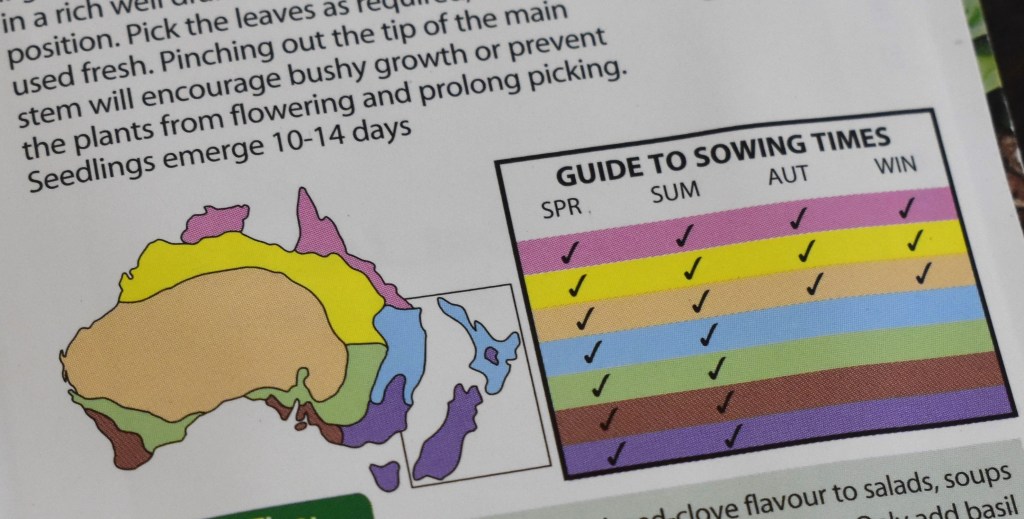
As you spend more time outdoors and gardening, you’ll realise that where you live has its own little weather quirks or microclimate and figuring out how this affects your garden can help give you an edge.
How much sun you get
Another crucial thing you can do to help learn about your potential homestead site is to look at how much direct sunlight you get. This allows you to determine where certain plants would do better than others. An easy way to track this is to find a location in your yard that lets you see as much of your yard as possible, usually a corner or the highest point. You want to be able to see and record everything. Then, every hour from dawn to dusk, go out to that spot and take a photo of your yard. The result will be a series of pictures documenting how much sun your backyard gets and which parts get direct sun and which don’t. As I mentioned, this is an excellent reference for planning and deciding where to grow things, as it provides valuable information on where best to place your plants. Having this information saved in pictures makes it easy to refer back to it at a later date.
Water availability
If you’re not connected to town or mains water, it will pay to look at how much rainfall you get on average, and again, google is your friend for this. Do you need to look into harvesting water to help you through the dryer months? Thankfully, I am connected to the water mains, so I don’t need to worry about that at this stage. However, I will touch on collecting rainwater for use in the garden in a later post.
Wildlife in your area
Is there wildlife that poses a threat to your efforts? If you don’t already know the answer, there are two ways to figure this one out. Talking to your neighbours and asking what animals frequent the area is a great start. The other is to live there and find out for yourself by observing your yard. For most people wanting to do urban homesteading, though, I assume you are already familiar with any animals, if any, that frequent your place.
A great example is the resident possum I dealt with for late spring and most of summer. If he wasn’t eating my vegetables or plants, he destroyed them as he moved about during the night. Thankfully, he’s moved on, as I haven’t seen or heard from him for a while.
Why do you want to do this, and what do you hope to get out of it?
Finally, there is one question you need to ask yourself before you start, and that is why you want to do this. Why do you want to turn your home into an urban homestead, and what do you hope to gain from it? Will it replace your income and become a new career, or is it just for fun?
Nothing is wrong with either option. Answering why you want to do this is simply an exercise to help establish what you will do and how you could do it. Somebody doing this for fun or as a hobby isn’t going to buy a rotary hoe and dig up their entire yard. Answering why you want to do this helps define what you want to achieve so you don’t end up biting off more than you can chew or end up overwhelmed and inactive by the endless list of jobs you have given yourself. At the end of the day, this will be a lot of work, and you want to enjoy it; if it becomes too much like a chore, you will be less likely to do anything and all your dreams and plans will grind to a halt and stagnate.
My plan
I spent a bit of time thinking and looking into all of these factors. Using the knowledge I had gained from my attempts at gardening over the past spring and summer, I devised the following plan.
To begin with, I will set up the backyard for my urban homesteading. I will leave the front yard as it is because I don’t want to create too much work for myself. I also get a lot of wallabies in the front yard during the night, so fencing and controlling them would be making a lot of unnecessary work for myself.
Although the state government and local council allow me to keep bees and chickens, given that I only plan to be in this house for two years, I won’t go down that path as I don’t want to deal with anything that requires that sort of investment and set up just yet.
Anything I put into the yard will be as temporary as possible because when I leave, I plan to do some landscaping to make the house more inviting in case I decide to sell. Having said that, I will increase my garden beds and rebuild the two beds that back up against the house. They are placed too close together, making getting between them difficult. Any future beds I put in will be placed far enough apart to allow me to push the lawnmower between them.
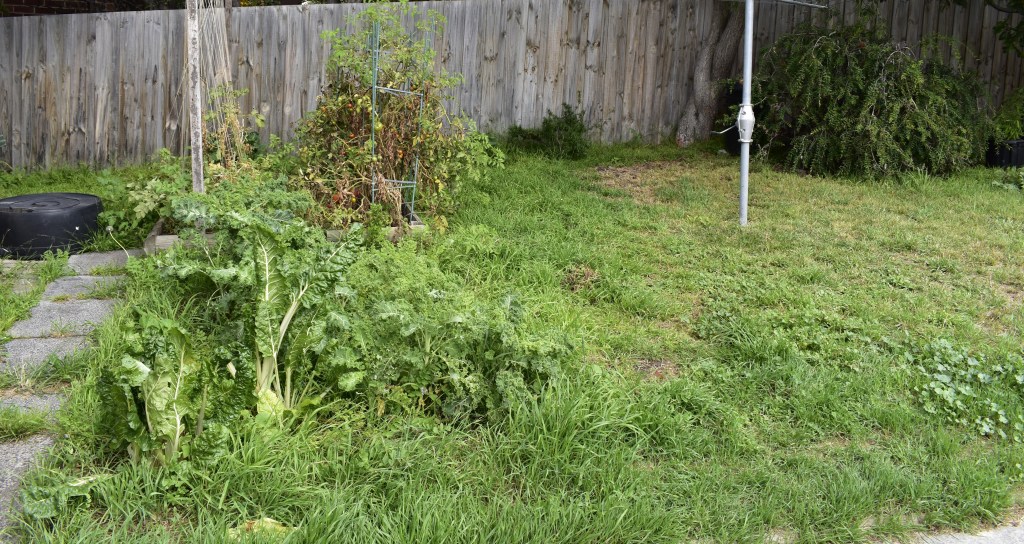
I am well and truly familiar with my climate zone and the way the sun moves over my backyard. So I don’t have to worry about anything there. And as I mentioned earlier, I am on mains water, so I don’t have to collect any, although I will at some point in the future I will, so it can help reduce my water bill.
As for wildlife, given my backyard fencing, I only have to worry about birds and the possum returning. In the past, bird netting has worked well, and as for the possum, I will have to get creative if he ever returns.
I am also thrilled with my soil health. The backyard was mostly clay and dirt when I arrived here last year. But with plenty of compost, time, and elbow grease, I have turned it around, and I am noticing a distinct difference between what I started with and what I have now. And yeah, there is plenty more work to be done, but I am much more confident with what I have now than in spring last year.
This leaves me with the final question, the why?
Although I don’t plan on doing this to go completely off the grid, grow all my food, or support myself financially, I do plan to supplement my diet and save money on groceries. I have already proven with my smaller garden over the spring and summer that I can grow and harvest a greater variety of produce than I can get from my local supermarket. So, I will continue this, just on a slightly larger scale.
For me, it will be more of a means of practising what skills I will need when I move out onto the land and properly set up my homestead. Basic construction, more gardening, propagation, preserving and selling some crops either to local stores, cafes or at a market stall are what I will focus on. There is still my business plan of making and selling preserves, and I will be treating that separately. But as far as the urban homesteading goes, It won’t be about making money. It will be more about gaining experience and having a go. If I happen to make a profit, then bully for me, but that isn’t the goal at this stage.
Perhaps the most significant driving factor for me to do this is what I said at the beginning of this post. Not doing it would go against my motto of doing whatever I can with what I have where I am. Not doing it feels like a disservice and a massive missed opportunity not only to myself but also to you, the reader. After all, the whole point of this blog is to show you that anyone can achieve some degree of self-sufficiency regardless of where they are in life.
So, with all this in mind, along with my motto, I came up with a set of rules to help guide my planning and decision-making as I work toward this goal. You don’t need to give yourself rules if you don’t want to, but I decided to do so as I thought it would help keep this goal on track along with all my others. Those rules are as follows.
- Everything I do has to be inexpensive.
It’s no surprise to anyone that although growing your own food can help save money, gardening can sometimes be an expensive hobby, as can setting up a homestead. So, to help with this and demonstrate that it can be done on the cheap, I have given myself a budget of 50 dollars per week should I need to buy anything. As much as I will avoid trying to buy something, if I have to, I will share where you can get the best deals on what you need.
- Nothing will be permanent.
As mentioned, I only plan to stay in this house for another two years. Because of this, nothing can be permanent. This will be great for anyone living in a rental property as it means you can follow along, try out ideas you may have thought doable in a rental and not have to worry about upsetting the landlord.
- Recycle and upcycle where I can.
This rule is pretty self-explanatory. I will avoid buying new items or materials and look for used or free items that I can use or repurpose to do what I need. Not only will this help save on costs, but it will also help to reduce items that end up in landfill, which is a big plus in my books.
- D.I.Y
This whole process is about improving my current skills and learning new ones. Doing things yourself is also what many consider to be a cornerstone of the homesteading movement, so it has to be included.
Now to begin
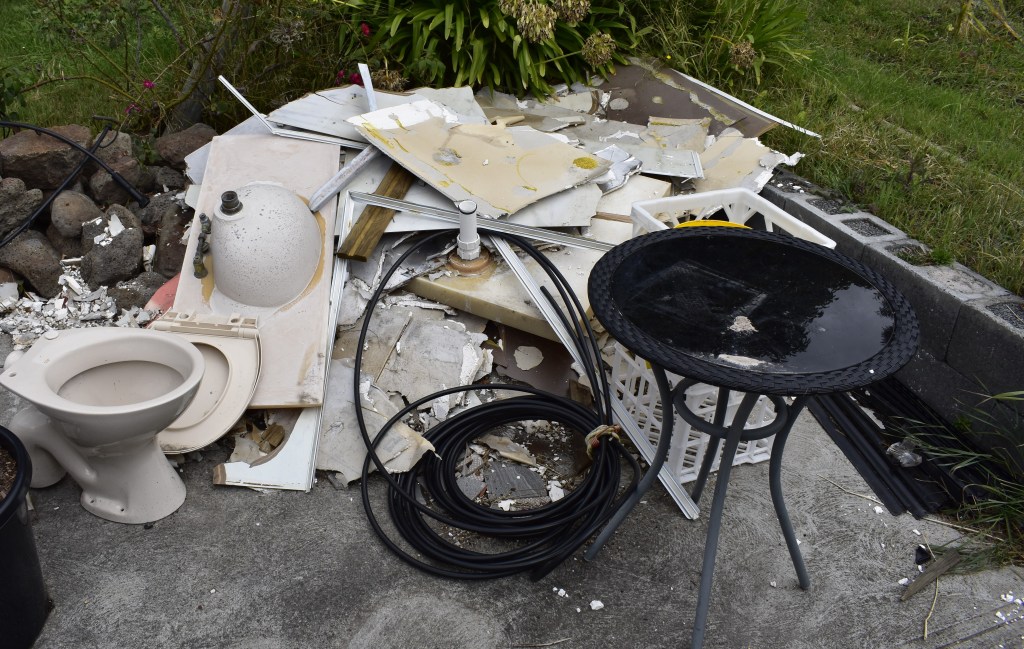
From here, I will need to tidy up my yard. Frankly, as you can see from the pictures, it looks more like a builder’s yard right now than a backyard. Once the rubbish is removed and the established plants are trimmed, I can get to work taking out the remains of my summer and fall plants and begin building what I need for the upcoming winter season.
Next week, once I have tidied up the yard, I will kick it all off by making a planter box from an old timber shipping pallet, start building my new garden beds and sow some seeds for winter. It will be another big and busy post. So, make sure to check back in.
Thanks for dropping in. I do apologise for the wall of text that this post has been, but sometimes it has to be done. I hope it was worthwhile and you got something out of it. If you like what I do, feel free to like and subscribe so you can stay up to date on what I get up to. Until next time, have yourself a good one, and I will catch you later.


Fantastic Duncan, great read!! Looking forward to seeing how it all turns out 🙂
LikeLike
Thank you very much, Rosalie. No matter what happens, I will post it here for all to see, so stay tuned. Cheers!
LikeLike