Hello and welcome back to the Vandemonian Homesteader. I hope life has been treating you well over these past few weeks.
As you may know, for the past few months, I have been spending my weekends living out at the shed in Forcett, working to get it ready so I can finally move in permanently. Although my days are spent working towards that goal, my evenings out there are a little more relaxed. I generally spend that time taking notes, getting measurements, writing shopping lists, and planning the next stage of work.
However, once everything for the day is done, I can then finally sit down and relax a little before I head off to bed. Given that the internet on my phone is spotty at best out there, and I don’t plan to get actual satellite internet until I’m permanently out there, I don’t really have the option to binge on YouTube or Netflix. So instead, I’ve been taking out books, sitting myself in front of the fire and spending my evening downtime reading.
I have been doing it so often recently that when I was thinking about what to write about for my next post. It eventually dawned on me that I should review and share some of my favourite books for the blog. Not just any books, though, books that have inspired me, given me something to think about and have taught me something new, the kind of old dog-eared, well-loved books you keep referring to over the years.
I also initially thought it would be a simple task, pick four books, re-read them and explain why you like them and would recommend them to people setting out on the off-grid, self-sufficient lifestyle. Sounds simple enough, but turns out no, that’s not the case. Just trying to decide on four books was hard enough. And while these books are not all along the lines of being a “homesteading 101” style bible that will teach you everything you need to know, they are instead books that relate to different aspects that you, as a would-be homesteader, or someone just looking for ideas around the home or garden, could utilise. Each one brings or offers something different, and they are on this list because I have, in the past and to this day, found them useful. Of course, narrowing it down to these four was difficult. I like a lot of my books, and many of them have been useful recently, so I’ve had a tough time sorting out which I think are best given my current situation. So, with that in mind, I managed to pick out the following four.
- The Market Gardener by Jean-Martin Fortier
- Practical Self Sufficiency by Dick and James Strawbridge
- Growing Vegetables South of Australia by Steve Solomon
- The Woodland Homestead by Brett McLeod
A quick point I must stress before we continue
I must stress that this is in no way an ad; I’m not being paid or given any incentives to write it. These are just my opinions and thoughts on a few books I have enjoyed and gained something from, and I want to share them because I think others could benefit from them as well.
So with that out of the way, let’s begin.
The Market Gardener by Jean-Martin Fortier
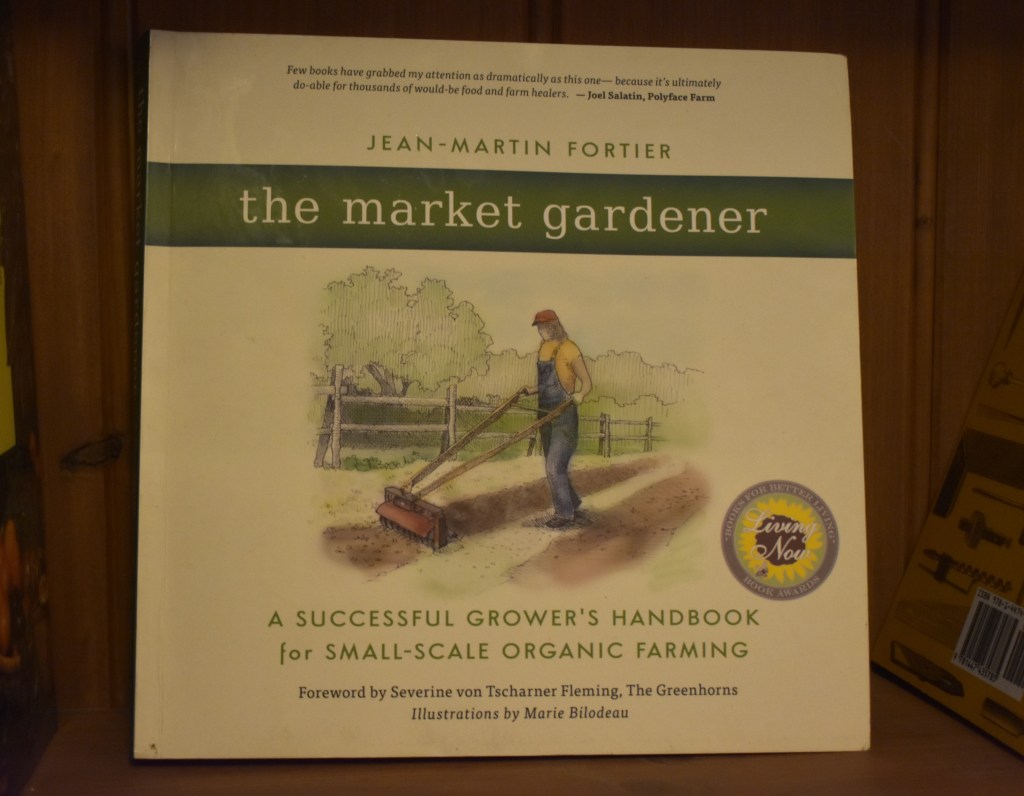
I first bought The Market Gardener by Jean-Martin Fortier several years ago, read it, and then placed it on the bookshelf. Not because it lacked value—quite the opposite—but because at the time I wasn’t in a position to apply its advice. Even then, I knew it would become an important resource in the future.
As I continued working towards my goal of establishing a productive growing space, I often returned to this book. Sometimes I would re-read sections; other times I would flick through it for inspiration. Now, as I prepare to move onto the block and begin setting myself up properly, I’ve dusted it off once more. It now sits permanently on my desk, within easy reach, and I find myself referring to it regularly.
Why The Market Gardener Made My Top Four Books
This book earns its place among my top four because, from the outset, Jean-Martin Fortier shows that with dedication, thoughtful planning, and hard work, the life many of us aspire to is genuinely achievable. He doesn’t just describe the lifestyle he and his wife have created—he clearly explains how their market garden functions and what others should consider if they wish to follow a similar path and achieve the same outcome.
What the Book Covers
The Market Gardener serves as a comprehensive guide to starting a market garden, with a strong emphasis on organic micro-farming methods. Fortier covers a wide range of practical topics, including:
- Choosing land for a market garden
- Leasing land as an alternative to purchasing
- Selecting tools and equipment
One point Fortier stresses is that large-scale machinery isn’t necessary. Instead, he focuses on hand tools and small powered equipment such as rotary hoes and walk-behind tractors. This approach makes market gardening far more accessible than traditional farming models and offers plenty of ideas for working efficiently without heavy machinery.
Growing, Soil, and Garden Management
Once the basics are established, the book moves into the growing process itself. Fortier begins with the importance of building and improving soil, then covers:
- Garden bed creation and management
- Weed control strategies
- Sowing and planting
- Post-harvest handling and storage
These sections are practical, clearly explained, and backed by real-world experience.
The Business Side of Market Gardening
In addition to growing techniques, Fortier also addresses the often-overlooked business and administrative side of running a market garden. He discusses budgeting, garden planning, and crop planning, using real examples from the market farm he and his wife developed. This makes the book particularly valuable for those who want a realistic picture of what’s involved.
Final Thoughts
While The Market Gardener is written as a guide for aspiring market gardeners, it’s also a worthwhile read even if you don’t plan to start one yourself. Many of the ideas and techniques translate easily to a backyard garden, making this an inspiring and practical book regardless of scale.
Practical Self Sufficiency by Dick and James Strawbridge
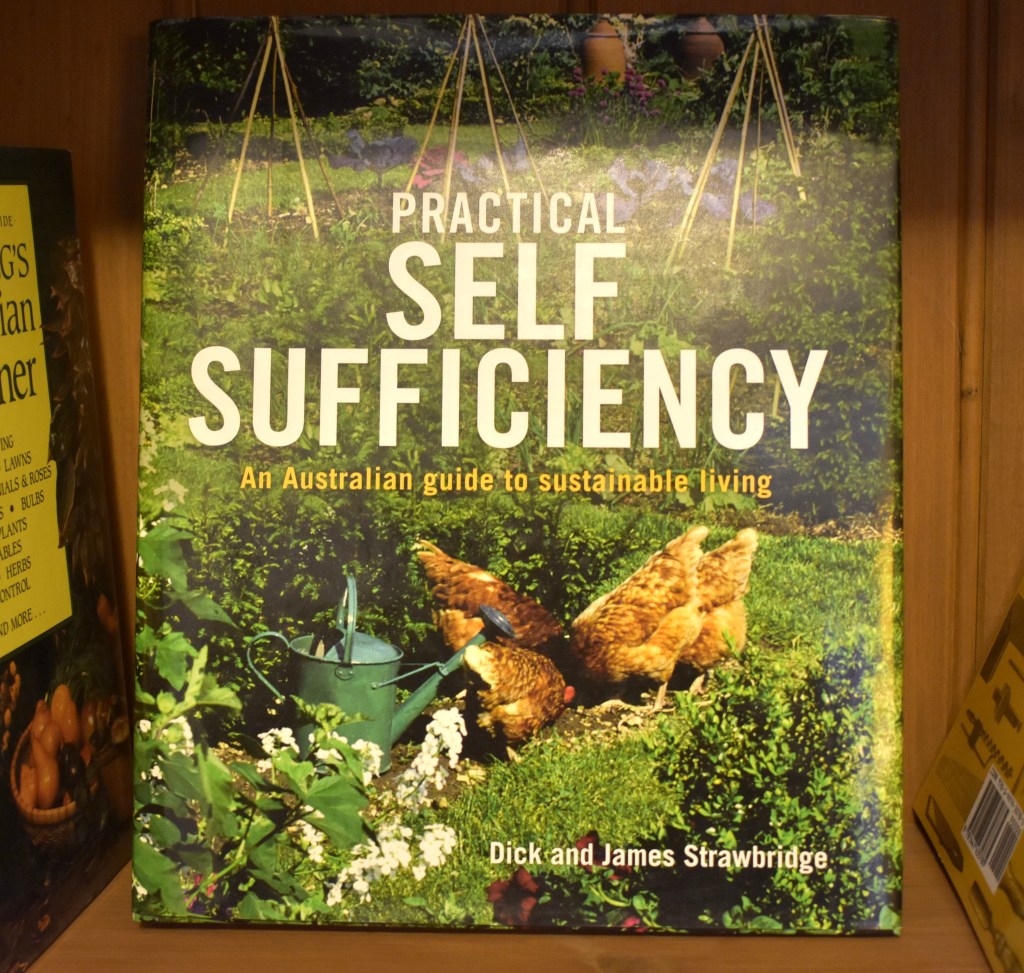
Practical Self Sufficiency by Dick and James Strawbridge is easily my favourite book on this list. Written by the father-and-son duo, the book covers an impressive range of topics related to homesteading and living a more self-sufficient lifestyle. As an added bonus, it’s written with an Australian audience in mind, which—while not always essential—is refreshing and occasionally very helpful.
Many readers may already be familiar with Dick Strawbridge from his television work. When I was younger, I remember watching him compete on Scrapheap Challenge during the evening on the ABC. More recently, I’ll sometimes come across episodes of his French château series, where he and his wife fix up and run an old French château as a wedding venue. That familiarity adds an extra layer of enjoyment to the book.
Why This Book Stands Out
This book was given to me many years ago, and it was the first self-sufficiency book I had; it has since become one of my favourites on the subject. It’s filled with page after page of beautiful, colourful illustrations and photographs, while the spaces in between are packed with practical how-tos and relevant information. It’s an excellent source of inspiration, and I still flick through it whenever I’m looking for ideas, solutions, or something new to try.
What the Book Covers
The book touches on almost every aspect of self-sufficient living, offering a broad overview rather than an in-depth technical guide. Topics include:
- Homesteading basics
- Food growing and preparation
- Practical household skills
- Self-reliant living projects
Because of its broad scope, it works particularly well as a starting point for anyone interested in exploring a more self-sufficient lifestyle.
A Note on Depth and Detail
There is one point worth mentioning for anyone considering this book. While I don’t see it as a negative, the information provided isn’t especially deep. Practical Self Sufficiency isn’t a book I would recommend for an intensive study session. Although it includes many excellent recipes and how-tos, most topics are only covered briefly, often in just a paragraph or two.
For that reason, this book works best as an idea generator rather than a one-stop reference manual. If you’re looking for inspiration, projects, and a broad understanding of self-sufficient living, it’s an excellent choice. However, you’ll often need to do further research elsewhere to understand or adapt a project to your own circumstances fully.
Final Thoughts
Despite its lighter depth, Practical Self Sufficiency remains a valuable and enjoyable book. It’s ideal for sparking ideas and encouraging experimentation, making it a great addition to any homesteader’s or self-sufficiency enthusiast’s bookshelf—particularly for those living in Australia.
Growing Vegetables South of Australia by Steve Solomon
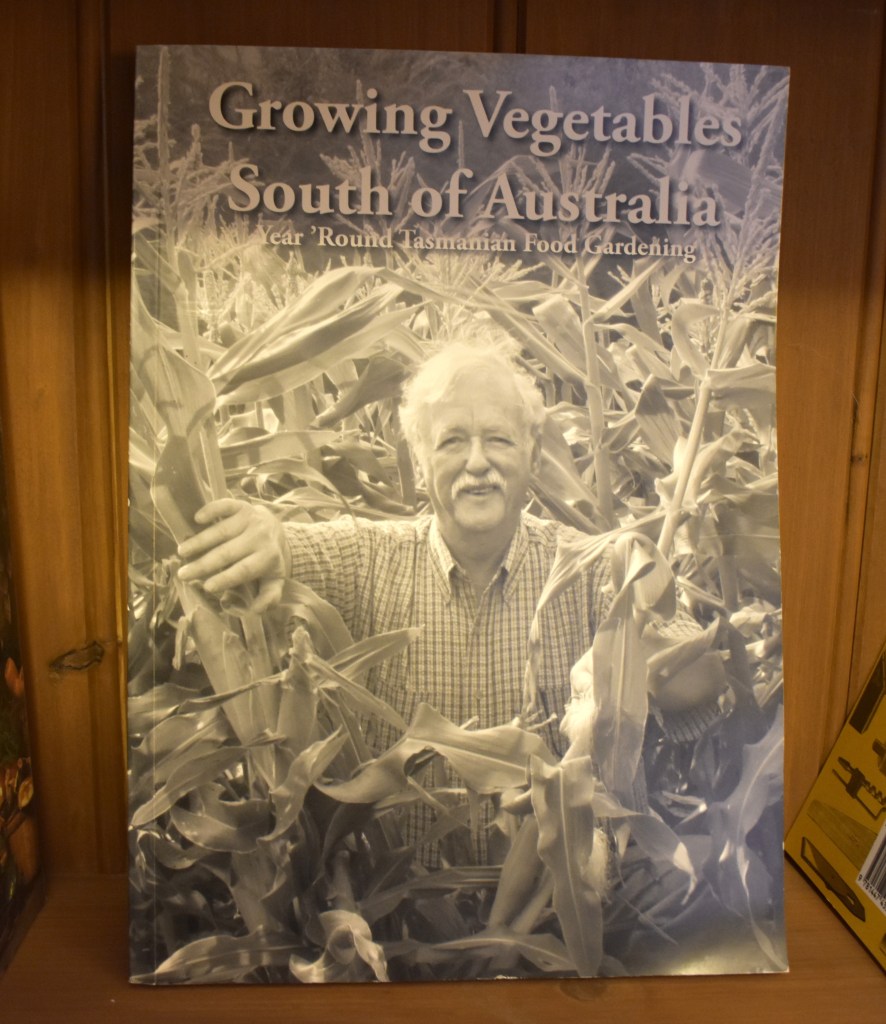
Steve Solomon is a highly respected gardening author originally from the Pacific Northwest of the United States. Over the years, he has written several influential books and founded the mail-order seed business Territorial Seed Company, making it safe to say he has deep experience in his field. After years of gardening and writing in the Pacific Northwest—most notably Growing Vegetables West of the Cascades—Solomon eventually moved to Tasmania. In 2002, he published what has since become a kind of bible for vegetable growers in the state: Growing Vegetables South of Australia.
In this book, Solomon applies decades of horticultural knowledge directly to Tasmanian conditions, addressing challenges that local gardeners regularly face. While many general gardening books explain how to deal with common problems, the region-specific knowledge in this book is what truly sets it apart. For anyone gardening in Tasmania, that local focus is invaluable.
What the Book Covers
Growing Vegetables South of Australia covers a wide range of essential gardening topics, including:
- Soil improvement and fertility
- Garden layout and planning
- Seed saving, collection, and storage
- Watering methods
- Tool selection and maintenance
In addition to the basics, the book includes locally specific growing guides, a Tasmanian seasonal calendar, advice on sourcing quality seed suppliers, and pest control techniques tailored to local insects. These details make it far more practical than a generic vegetable gardening guide.
Why This Book Matters to Me
I’ve used this book in the past when setting up garden beds in my backyard, and it’s proving just as useful again now that I’m dealing with entirely different soil types and growing conditions out on the block. It’s one of those books that continues to earn its place on the shelf through repeated, real-world use.
There are two main reasons I included this book on my list. First, quite simply, it’s useful. I enjoy it, I get a lot out of it, and I believe others would too. It’s a valuable resource for everyone, from the casual weekend gardener to those who grow most of their own food.
A Broader Lesson for Gardeners Everywhere
The second reason I chose this book is not just for what it contains, but for what it represents. I understand that not everyone reading this blog lives in Tasmania. If you’re elsewhere—whether in North America, the UK, or Europe—I encourage you to seek out region-specific gardening books for your own area. Ask around, check with local gardening or horticultural clubs, and see what’s available. These books are worth their weight in gold as they are often written by people who live locally and have first hand knowledge that, more often than not, is gained from dealing with the same problems you are currently facing.
In my experience, many of these books are self-published in small print runs, making them difficult to find. They may lack glossy covers and colourful photos, but they often contain far more practical and relevant information than mainstream gardening books.
You’re unlikely to find them in large chain bookstores, but smaller independent shops, second-hand bookstores, and local seed companies are well worth checking. In fact, that’s exactly how I found my own copy.
Final Thoughts
Growing Vegetables South of Australia is an outstanding example of how valuable region-specific gardening knowledge can be. If you garden in Tasmania, this book is close to essential. If you don’t, let it serve as inspiration to find a similarly focused resource for your own local conditions—you’ll likely be far better off for it.
The Woodland Homestead by Brett McLeod
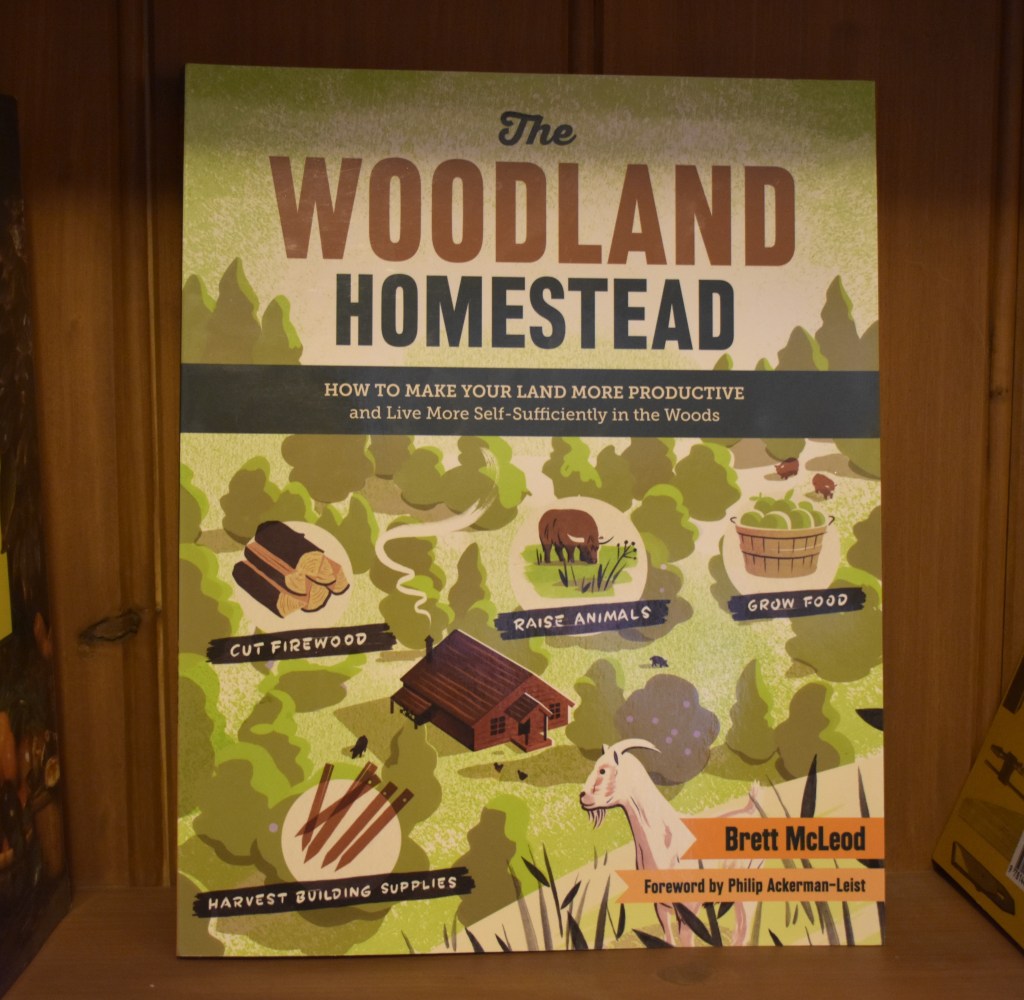
The Woodland Homestead by Brett McLeod is one of the newest additions to my collection, and despite initial doubts about its suitability, I’m very glad I picked it up.
McLeod has written an outstanding guide for anyone homesteading on wooded or forested land, like my own block. The book focuses on making the most of the lumber and other natural resources available on your property, encouraging you to think more like a forester than a farmer.
What the Book Covers
One chapter that stood out covers different types of axes—their uses, maintenance, and sharpening techniques—practical advice that has genuinely made my work on the block easier. The book also explores Silvopasture, an agroforestry system combining livestock, trees, and forage production on the same acreage. While my property isn’t suited for Silvopasture, it’s a fascinating concept to read about.
McLeod goes on to cover harvesting your own lumber and turning it into usable products, including felling, transporting, and milling. This outlook has transformed how I approach my land. There have been more than a couple of times now where a quick walk with an axe and chainsaw has saved me a long trip to the hardware store. Another added bonus of this book is that since reading it, I’ve also spent more time familiarising myself with and learning about the trees on my property.
A note worth mentioning
While written primarily for an American audience—particularly regarding the species of trees—the principles of the book can easily be translated to Tasmanian conditions, especially once you learn local hardwoods and softwoods. As with trees anywhere, most of them share enough common characteristics, allowing the book’s techniques to be easily adapted to other regions, not just Tasmania.
Final Thoughts
What I particularly appreciate about The Woodland Homestead is how it encourages a shift in mindset. It helps you see opportunities and potential resources on your property that might otherwise be overlooked. For those with forestry on their block, this book is a must-read. For those, like me, with heavily forested land, it is essential.
That’s all for now
And there you have it: the top four books I would recommend to anyone looking to live a more self-sufficient life or to start their path toward the homesteading goal. If you are interested in hearing any other book recommendations, please let me know. I have amassed quite a collection over the past few years, and I am happy to share my thoughts on what I have.
This will be my last post of the year, other than a brief Christmas post. So thank you all for the past year. I have really enjoyed how things have turned out, and I look forward to seeing you all in the new year, where I have plenty planned to keep me busy and hopefully you guys entertained.
Thanks again for joining me today, and until next time, look after yourself and have a good one.
 Vandemonian Homesteader
Leave a comment