Hello, Hello, Hello, and welcome back to the Vandemonian homesteader. I hope you have all been well and that life has been treating you well.
It has been a month since my last post, and what a month it has been. In my previous post, which happened to be my anniversary post, I shared that I had decided to bring the move out onto the bush block forward by a few years and try to complete it this year or, by the very latest, early next year.
Well, it turns out that move was a smart one, as a lot has happened over the past month, and as funny as it sounds, everything seems to be working as it should. All the little pieces are falling into place, and everything is finally working out. So, I hope to keep that feeling by maintaining my efforts and not losing momentum. As it is, in the past few weeks, If I haven’t been at my 9 to 5 job, I have been up at the bush block working on getting it ready. And thankfully, I have some great news to share. However, to avoid creating an extremely long post with two different topics, I will save all the news and updates for my next post. So, before I get to that, I have a couple of homemade cleaning product recipes I’d like to share. And considering that I promised them some time ago, I should probably get on with it.
So today, I bring to you some recipes for making your own environmentally friendly cleaning chemicals at home.
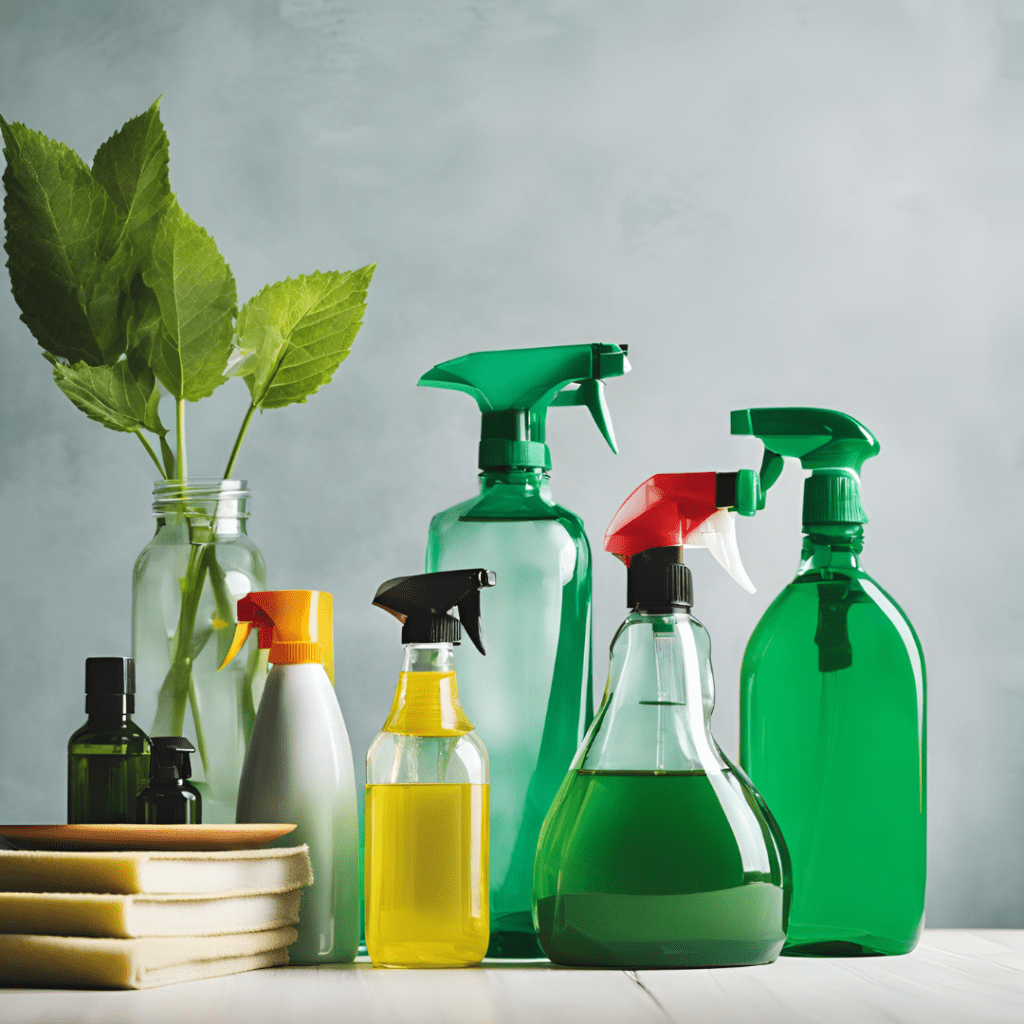
Homemade Cleaners
Around my house, and many other Australian homes, there are a lot of day-to-day or background products and appliances that most people don’t think twice about or even pay any attention to, that is, up until the day it stops or runs out. As I get ready to move from my fully connected and serviced house in the town out deep into the bush that will be my off-grid homestead, I find myself looking at a lot of things and wondering if they would work well out there or if I would need to find another solution?
Before moving, I will need a new, more energy-efficient fridge and a more water-efficient washing machine. But there has been one thing I have been thinking about for a while now: the cleaners I use around the house, stuff like my dishwashing liquid or laundry detergent.
Currently, I am buying the cheapest I can in bulk to help reduce my costs and save money. And as great as it is for my budget, it is not so great for the environment. Now, while I’m on town water and connected to town sewerage, that’s not so much of a problem. However, shortly, I will have to manage my own waste and grey water, and having high levels of potentially harmful chemicals washed into the environment every day will quickly become a serious problem. One that I would like to avoid.
So, to remedy this, I have been looking for some simple recipes that will help make what I consider to be the most commonly used cleaning products. These are dishwashing liquid, laundry detergent, general purpose cleaner, window cleaner and an antiseptic. Today, I will share what I have found.
Laundry Detergent
Ingredients:
- 1 cup bicarb soda (sodium bicarbonate)
- 1 cup borax (sodium borate)
- 1 140g bar of soap (Castile or any natural soap would do)
- Optional: Essential oils (like lavender or tea tree) for fragrance
Instructions:
- Grate the Soap: Use a cheese grater or food processor to grate the soap bar finely.
- Mix Ingredients: In a large bowl, combine the grated soap, soda, and borax. If you want to add essential oils, mix in a few drops at this stage.
- Store: Transfer the mixture to an airtight container.
Usage:
- Use about two tablespoons of this detergent per load of laundry.
Dishwashing Liquid
Ingredients:
- 1 tablespoon bicarb soda (sodium bicarbonate)
- 1 cup liquid Castile soap (or any natural soap)
- 1 tablespoon white vinegar
- 1 cup water
- Optional: Essential oils (like lemon or lavender) for fragrance
Instructions:
- Combine the liquid soap, soda, vinegar, and water in a bowl. Stir gently to avoid too many bubbles.
- (optional) If you’d like to add a scent, add a few drops of your favourite essential oil.
- Store: Transfer the mixture into a bottle with a pump or squeeze top for easy use and store it as you would typically store dishwashing liquid.
Usage:
- Use as you would any regular dish soap. Just a tiny amount is usually enough to clean your dishes.
- Remember to shake before each use, as some of the ingredients may have separated.
General-Purpose Cleaner
Ingredients:
- 1 cup white vinegar
- 1 cup water
- 1 tablespoon baking soda
- Optional: Essential oils (like lemon, tea tree, or lavender) for fragrance and added antibacterial properties.
Instructions:
- Mix Ingredients: In a spray bottle, combine the vinegar and water. Slowly add the baking soda, then gently swirl to combine. If you are using essential oils, add about 10-15 drops of your chosen oil.
- Store: Cap the spray bottle and label it for easy identification.
Usage:
- Shake well before each use. Spray on surfaces and wipe with a cloth or sponge.
Window Cleaner
Ingredients:
- 1 cup water
- 1 cup white vinegar
- Optional: Essential oils (like lemon) for a fresh scent
Instructions:
- Mix Ingredients: Combine the water and white vinegar in a spray bottle. If you are using them, also add in the essential oils.
- Shake Well: Cap the bottle and shake gently to mix the ingredients.
- Store: Label the bottle for easy identification.
Usage:
- Spray the solution on the glass surface and wipe with a microfiber cloth or paper towel for a streak-free finish.
Antiseptic Cleaner
Ingredients:
- 1 cup water
- 1 cup white vinegar
- 1 teaspoon tea tree oil
Instructions:
- Mix Ingredients: Combine the water and white vinegar in a spray bottle. Add the tea tree oil.
- Shake Well: Cap the bottle and shake gently to mix the ingredients.
- Store: Label the bottle for easy identification.
Usage:
- Spray the solution on surfaces and wipe with a clean cloth or sponge. It’s great for kitchens, bathrooms, and other high-touch areas.
With these recipes in hand, your house will be sparkling clean in no time. But before we move on, I must cover a few important facts, especially when using homemade cleaning chemicals.
- Always test a small area first. Most of these recipes contain vinegar, which reacts badly and can stain stone surfaces. This is why, it pays to test your cleaners on a small, unnoticeable part of the bench or surface that is to be cleaned, like a small section in the corner or anywhere out of the normal lines of sight. That way, if it makes a mark, it isn’t out in the open for all to see. The same applies to laundry detergent. If you’re unsure how a fabric may react, test a little first before washing a full load.
- The antiseptic provided is an excellent solution for quick little cleans around the house. I would be lying if I said it killed 100% of germs or bacteria, as I don’t know. In this post-covid world we live in, if you are seriously concerned about the strength of your antibacterial wash, I would seriously recommend you stick with your store-bought products. Regardless of what I spray on door handles or countertops around the house, I will always keep a bottle of Dettol or Betadine in my first aid kit.
- Although these chemicals are far more environmentally friendly and safer than what you would normally buy, they should be treated just as dangerous as the store-bought variety, especially if you have small children or pets running around. Always keep your cleaning products out of the reach of children in appropriately sealed containers.
And there you have it. With these chemicals in hand, your house will be spotless and grime-free. It’s actually pretty amazing to see the usefulness of what would typically be considered pantry staples and how well they can be applied to multiple uses other than cooking. And for those readers who are already living off the grid with your own greywater or septic systems, these products work perfectly fine with your system.
If there are any special hacks or tricks that you use when cleaning around your own home, I would love to hear it, so please feel free to add them to the comments below.
As I mentioned earlier at the beginning of this post, I will review my activities for the past month and share some fantastic news next week. Thankfully, I have been documenting everything that I have been up to during that time, along with my thoughts, so that I can share it all here. After all, what’s the point of saving and working towards a homestead if I don’t talk about all the challenges of moving out there?
So please come back and check that out. It’s going to be a great post. But until then, as usual, thanks for dropping in. Have yourself a good one and I will catch you later.
 Vandemonian Homesteader
Leave a comment