Hello, and welcome back to the Vandemonian homesteader. I hope you’ve had a great week and are doing well. Unfortunately, at some point during the past few days, I’ve been struck down with a case of the dreaded lurgy, which is why I’m a few days late in posting this. But as with everything, life carries on regardless of how sick you are.
I wanted to share a simple method I have been using to deter slugs and snails from eating my vegetables. As anybody who has grown anything leafy would know, there is nothing worse than going to all the trouble of growing something and getting all excited about its progress to discover one morning that slugs and snails have eaten all your hard work and left you with nothing. Thankfully, there is a simple solution to that dilemma that requires no poisons or baits and is actually beneficial to your garden. The best part is that all you need is eggshells.
Previously, I talked about some of the uses of eggshells, and today, I bring you another. I have done this with many of my previous gardens and have had to start using it again with my current one.
As I keep saying, I am trying to avoid using poisons and chemicals in my garden; if I can find a way to solve my problems without using chemicals, I will. And this is why I repeatedly rely on ground-up eggshells instead of snail and slug bait.
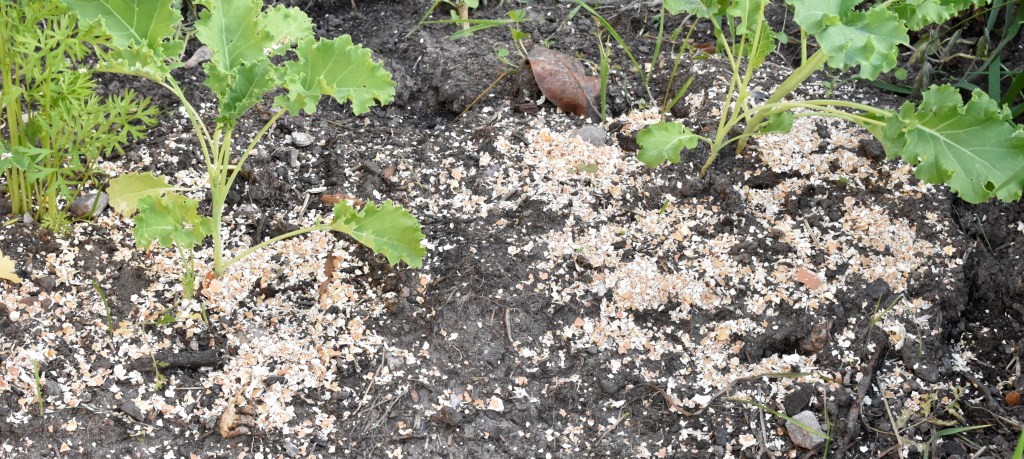
Imagine, if you will, walking barefoot across a field of broken glass while blindfolded. As unpleasant as that thought is, that’s precisely the effect I will create for the slugs and snails in my garden. As a snail or slug moves about, it lays down a mucus layer to help it crawl along. As it moves over the ground-up egg shells, the fine shell fragments get caught up in the mucus and irritate them. It’s their equivalent of walking across broken glass. But before you run out scattering the eggshells left from your breakfast around your garden, you must prepare them a little first.
Preparing your eggshells
Thankfully, the most challenging part of this stage is collecting enough eggshells to make it worth doing a batch. After cracking an egg and using its contents, I wash the eggshells under warm water, allowing them to dry. Once dry, I store them in a freezer bag or container in the freezer. And after a while, when I have enough eggshells saved, I can start preparing a batch of slug deterrent. I do recommend saving up a large amount of eggshells as you will use a lot of it very quickly.
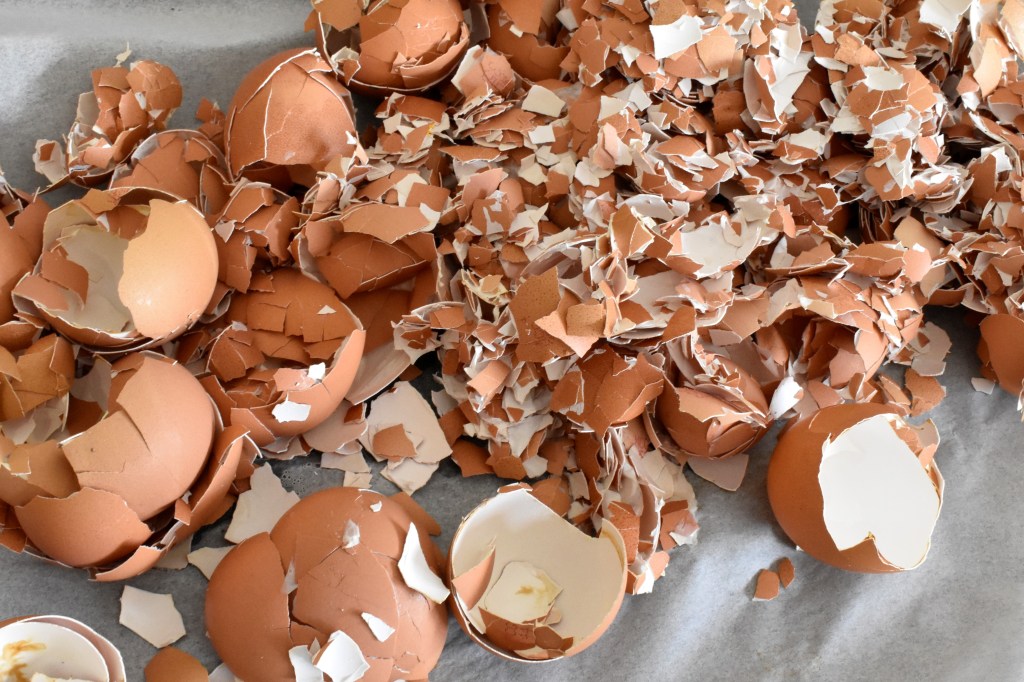
To begin with, lay your shells out on a baking tray and heat your oven to 180 degrees Celsius. Then bake them for 20-30 minutes. Baking or drying out your eggshells serves a few purposes. It helps remove any excess moisture left in your eggs from washing or freezing. It also kills off any bacteria that may be present, dries out the eggshell membrane, and makes the shells brittle, making them easier to grind up to a more consistently fine product.
Having moisture in your shells as you grind them can result in clumps of the shells being held together by the membrane, and you may also be left with a noticeable egg smell. If you don’t think your eggshells are dry enough, you can easily fix this by placing them back in the oven for ten minutes or more until they are dry.
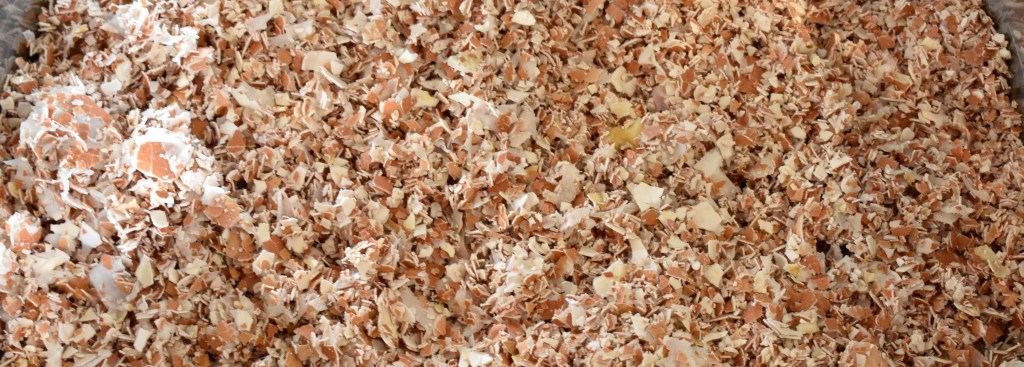
Once your shells are dried and cooled, we will now need to grind them up. I use a mortar and pestle. It takes some time, but I am happy with the results. I imagine an electric herb grinder would work just as well if you had one. But whatever you use, you will need to grind them until they look like breadcrumbs. If the pieces are too large, they won’t get caught up in the mucus of the slugs and snails, and if they are too fine and powdery, they won’t be rough enough to be irritating.
Once you’ve finished grinding them up, feel free to use them straight away in the garden, or if you did the same thing I did and prepared a large batch, they can be stored in a jar or bag and kept until needed. Provided you dry them out properly and keep them dry, they will last for a long time; this allows you to save up enough eggshells over winter so you can be ready for spring.
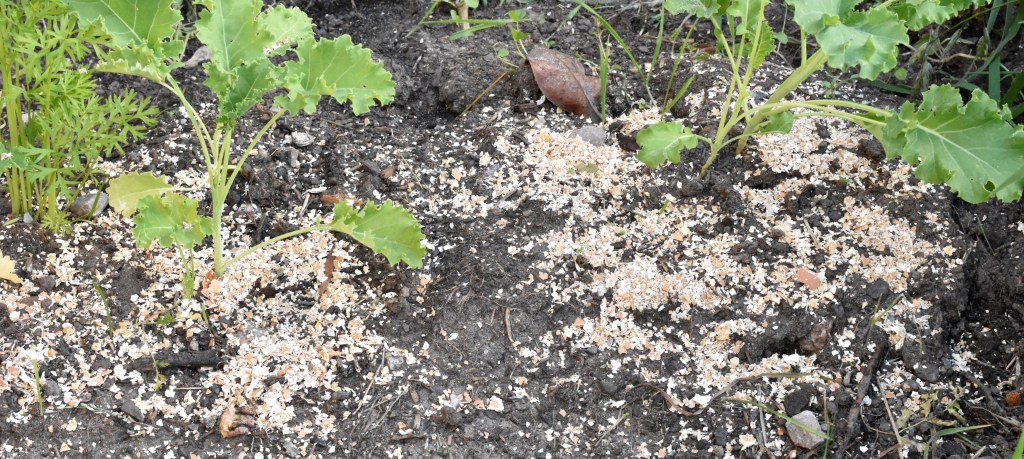
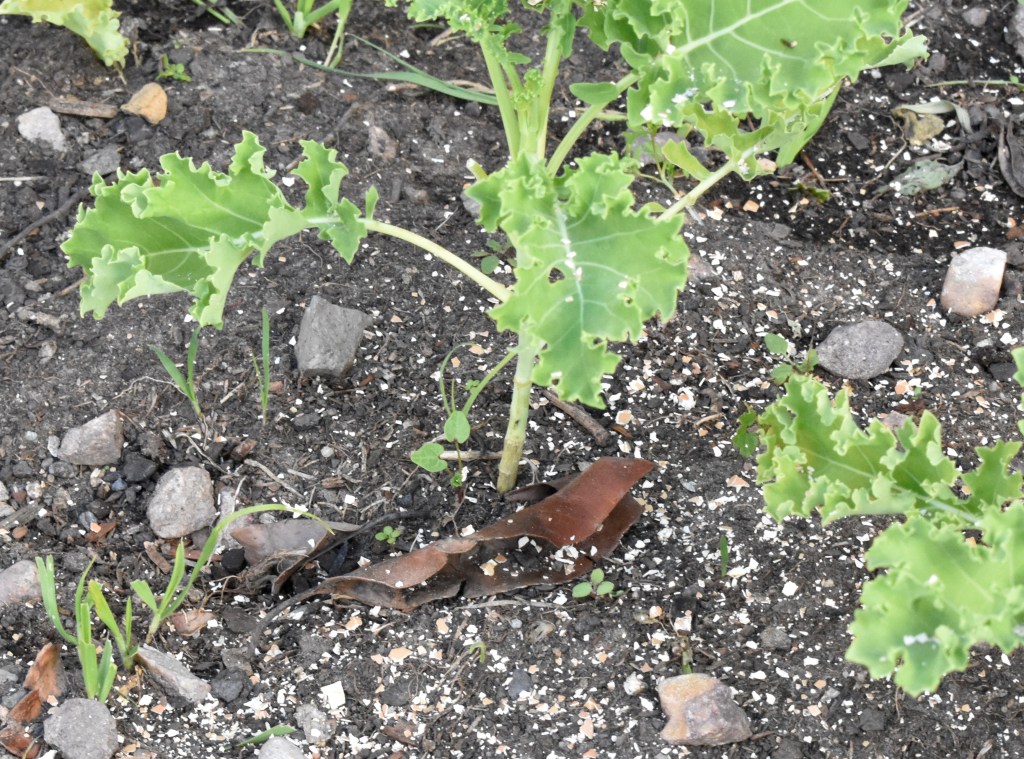
And before I wrap this up for today, I also need to explain how to apply the eggshells to your plants, as it does make a difference. When sprinkling the eggshells around your plants, you have to be generous. You will need to create a sizeable ring of eggshells around the plants you are trying to protect. If there are too many gaps in the ring or if it’s too narrow, the snails and slugs could push on through. If you have a good layer of shells without gaps, the slugs and snails will decide to turn around as the shells in their mucus will become too much.
And that’s how I make my slug deteretant. I’ve found it works pretty well with the pests in my area, and it has the added bonus of being natural, so with time, the eggshells will break down into the soil, and I don’t have to worry about poisons or baits laying around my garden. With any luck, I daresay it will work just as well for you. If you have any tried and tested ways of keeping slugs and snails off your plants that don’t involve chemicals, I would love to hear about it, please mention it in the comments below.
Given that it’s the time of year in Tasmania when the branches of fruit trees are packed with delicious fresh fruit that’s ripe for the picking. And because I had just been given a big bag of plums. I thought that next week, I would show you another way to preserve fruit and share a recipe for some spiced stewed plums with you. So until then, thanks for dropping by, and until next time, have yourself a good one, and I will catch you later.
 Vandemonian Homesteader
Leave a comment