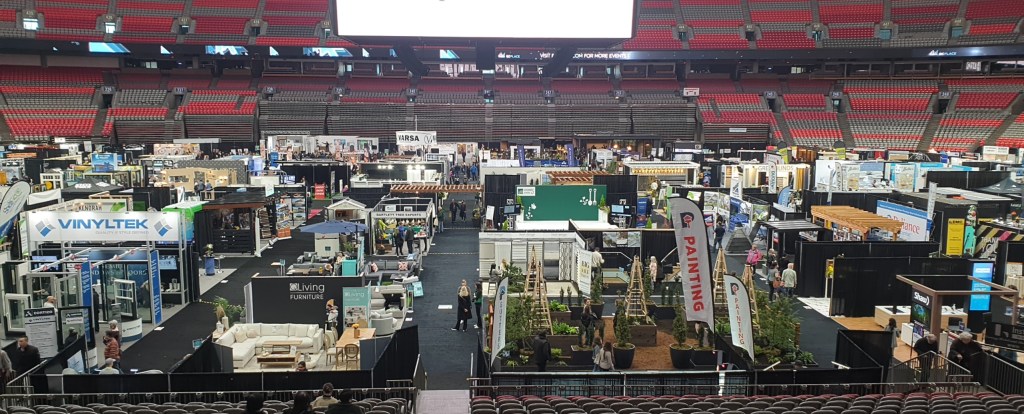
Hello and welcome back, I hope regardless of where you are that you’ve had a great week. I know here in Vancouver the weather has been amazing recently and I’ve been out and about making the most of it. Over the weekend I was able to go and have a look at a home and garden show that was held locally. I was hoping to see if it had ideas for applying green and renewable ideas to modern homes, ideas that I could use when I eventually set up my homestead. Unfortunately, other than the few stalls selling solar panels there really wasn’t much on offer. There was a great greenhouse on display, a brilliant self-contained vertical garden stall and I spoke to a man selling geodesic greenhouse frames other than that sadly there wasn’t much on offer that interested me. It would be nice if they had more ideas on ways green or renewable tech could be applied to new builds or pre-existing homes, such as harvesting rainwater in suburbs for use on gardens, building materials made from recycled waste or solar water heaters. These are popular back in Australia so I was curious to see if they were here in Canada and if so how they were adapted for local conditions. Hopefully next year there will be more on offer.
Now as promised, this week I wanted to talk about some common problems you may encounter when growing indoors. Just because your plants are indoors doesn’t mean they are immune from trouble. If anything, it now means the opposite, because not only is the plant in an environment that it shouldn’t be in but it is now exposed to its greatest danger, excessive kindness and attention from its owner. Yes, unfortunately, your indoor plants can die from too much love, everyone is guilty of this, even me. But hopefully, after what I have to share with you today, you can come away with a better understanding of what needs to be done to help your plants thrive should any troubles arise.
Before we go into the list it’s worth mentioning that the problems most houseplants face often start small and can easily be fixed if noticed early enough. But if left untreated that small problem can lead to a larger problem becoming more difficult to treat. So, remember to check your plants regularly and keep an eye out for any issues. Below I’ve listed eight of the most common problems faced by indoor plants.
- Waterlogged soil or a foul odour – this can be an issue that comes from over-watering your pot/container or having poor drainage issues. Check your container to see if it has adequate drainage or cut back on the number of times you water it. If left too long untreated it can lead to root rot, gnats and eventually the death of your plant.
- Browning leaves, wilting, and soil/potting media pulling away from its container – these are signs that you are not watering your plant enough. If you are unsure whether or not you’re watering it enough you can buy a water meter from most places plants are sold, or you could get a self-watering pot. The finger method is a tried and true way to check if your plant needs watering. Simply stick your index finger into the pot’s soil, at least up to the first joint. if the soil is wet, you don’t need to water it. If it is dry then you can go ahead and give it a good soak. That’s the beautiful thing about gardening, it can be as simple or as complicated as you are willing to make it.
- Yellowing leaves or burnt leaves – as much as yellowing leaves can be an indicator of many things, it is often a sign that your plant is getting too much sunlight. Try relocating your plant to an area with less direct sunlight and see if that makes a difference.
- Stretched or “leggy” plants – if your plants are growing in a way that leaves them looking tall, spindly, stretched or leggy they may need more sunlight, try relocating them to an area with more natural direct sunlight or invest in a grow light.
- Lopsided plant growth – as your plant grows it is looking for the sunlight and growing towards it, because of this many houseplants will grow lopsided. To resolve this rotate the pot once a week to encourage a balanced and normal growth.
- White or powdery spots – this can be powdery mildew, if you have a plant showing the symptoms of powdery mildew it should be isolated away from your other plants as the spores from the fungus that causes powdery mildew can spread via the breeze and infect your other plants. To treat this there are a couple of homemade remedies you could make to help treat your plant otherwise you could look at your local nursery for fungicides.
- Small flies or gnats around houseplant – these little guys are fungus gnats, they love wet soil and warm environments making overwatered indoor plants their perfect environment. There are several ways to eliminate these guys if you notice them buzzing around your plants. First of all, isolate the affected pot/plant. Drain any standing water from its saucer and apply pebbles to the saucer to help water drain out of and away from the container. Don’t water the plant for a week and a bit so that the soil can dry out completely. This will kill any mature gnats and the larva. You can also sprinkle cinnamon on the soil of your pot plant or water your plant with a cold diluted chamomile tea. Both are natural fungicides that will kill the gnat’s food.
- Leaves falling off at a higher rate, stunted growth, brown marks on leaves and black or brown roots – these are signs of root rot, to be sure you would need to check the roots of your plant. You have root rot if they are black or brown instead of a healthy white. If caught early enough this can be treated. Root rot is caused by waterlogged soil that can allow for fungal growth and the roots of a plant starved of oxygen. It can be avoided by ensuring your plant has proper drainage and isn’t overwatered. To fix root rot, remove all the soil from your affected plant ensuring you gently wash all the soil off the roots, then dispose of this soil, it cant be reused. Using scissors or shears trim away any rotten or affected roots leaving only the healthy white ones. If you intend to reuse the same container, sterilize it and use fresh potting media to re-pot the plant. Any tools or equipment used need to be sterilized to prevent passing the root rot causing fungus onto another plant and as mentioned before the soil/media from a plant infected with root rot can not be used and should be disposed of.
Of course, there are countless other problems you may experience along your journey as a plant parent but these are the most common you may encounter. Some of these issues deserve a greater more in-depth explanation as there are many ways that they can be caused and treated, but I will save that for a later post.
Also in other news, I have decided to add some spring (green) onions to my little balcony garden. They don’t require much room and it is another ingredient I like to use regularly in my cooking. I had an old pot left over from a plant that died and some soil left over so I grabbed some seeds from the hardware store and thought I would put them all to good use. I daresay that as the weather warms up I will be slowly adding to the little potted garden I have. And with that, we come to the end of another post, thanks for your time and I hope you got something out of it. Until next time, have yourself a good one and catch you later
 Vandemonian Homesteader
Leave a comment